You bought the beach house for the easy life: ocean breeze through open doors, salt in the air, sunset from the terrace. Then the furniture started giving up. The pretty rattan chairs you brought from the city went soft and brittle in a single rainy season. The metal table legs bled rust streaks onto the tile. Cushions faded from deep navy to a sad grey by the second summer. If you own or are outfitting a place along the Coronado corridor or the City Beaches, you've learned the hard truth fast: the same air that makes this coast paradise is brutal on furniture.
The good news is that a relaxed-luxury beach house is absolutely achievable here. It just asks for different choices than a home in the city or back wherever you came from. Get the materials and the layout right, and your second home stays beautiful with almost no fuss, even when you're away for weeks at a time.
Understand what the coast actually does to furniture
Before you buy a single piece, it helps to know your three opponents. They are constant, and they don't care how much you paid.
- Salt air carries fine, corrosive moisture that attacks exposed metal and accelerates rust, and it rots natural wicker and rattan from the inside out.
- UV from intense tropical sun fades fabrics, dyes, and unprotected finishes, often faster than people expect on a west-facing Pacific terrace.
- Humidity keeps everything damp, which warps particleboard, swells unsealed joints, and invites mildew on cushions and porous surfaces.
You don't beat these forces with one miracle material. You beat them with smart, layered choices, piece by piece.
Choose materials that earn their place by the sea
This is where a beach home lives or dies. Spend your attention here.
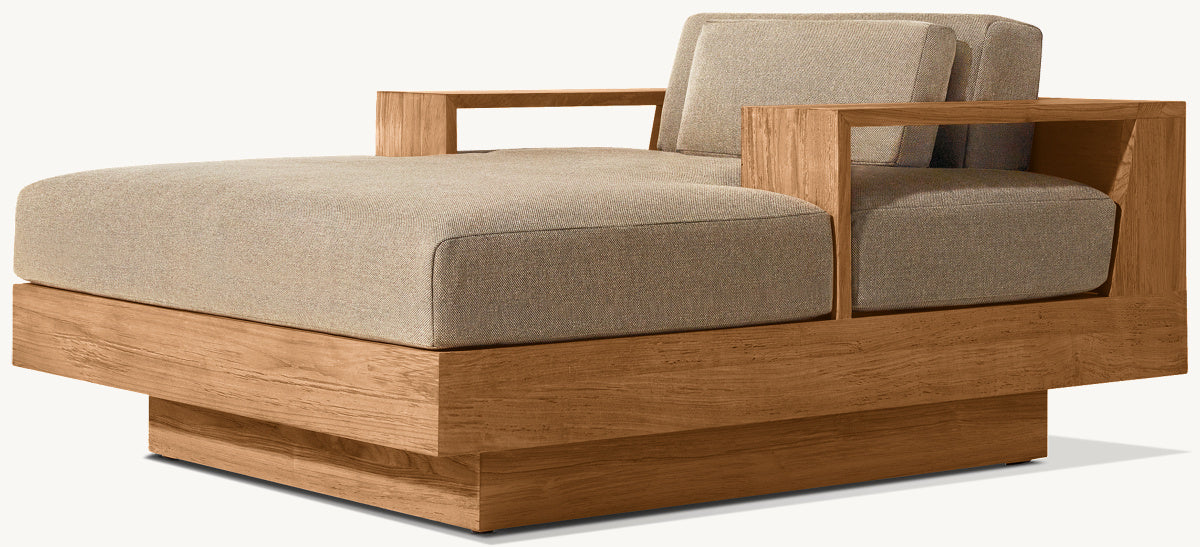
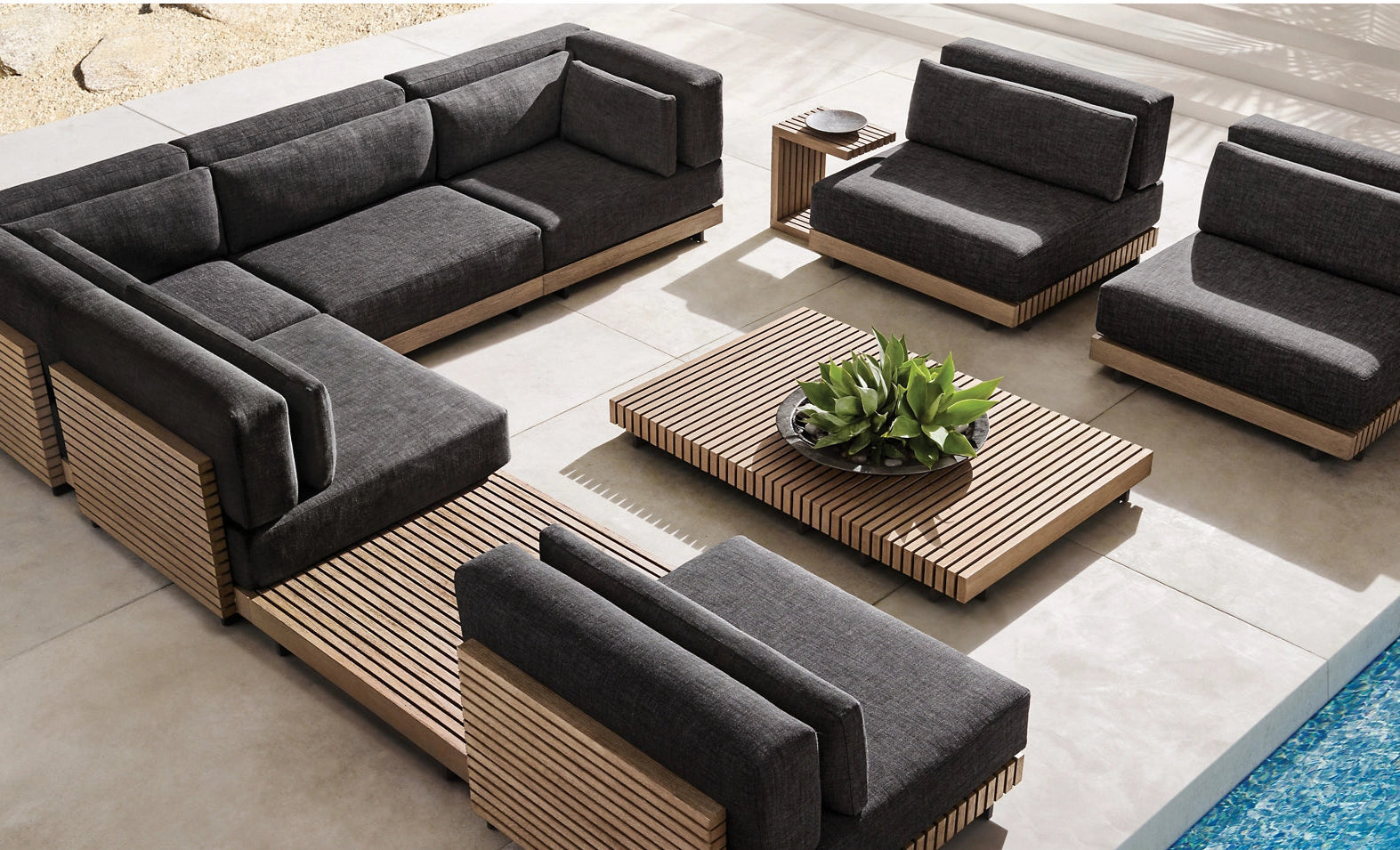
Durable hardwoods. Dense tropical hardwoods like teak are a classic coastal choice for good reason: their natural oils help the wood resist moisture and deter rot, and they hold up far better outdoors than softer woods. Be realistic, though, teak resists and deters; it isn't waterproof or termite-proof, and how it performs depends on the grade and age of the wood. Left untreated, teak weathers to a soft silver-grey; oiled periodically, it keeps its warm honey tone. Either is beautiful. What matters is that you're starting with a wood built for this environment, not a panel product that swells the first humid week.
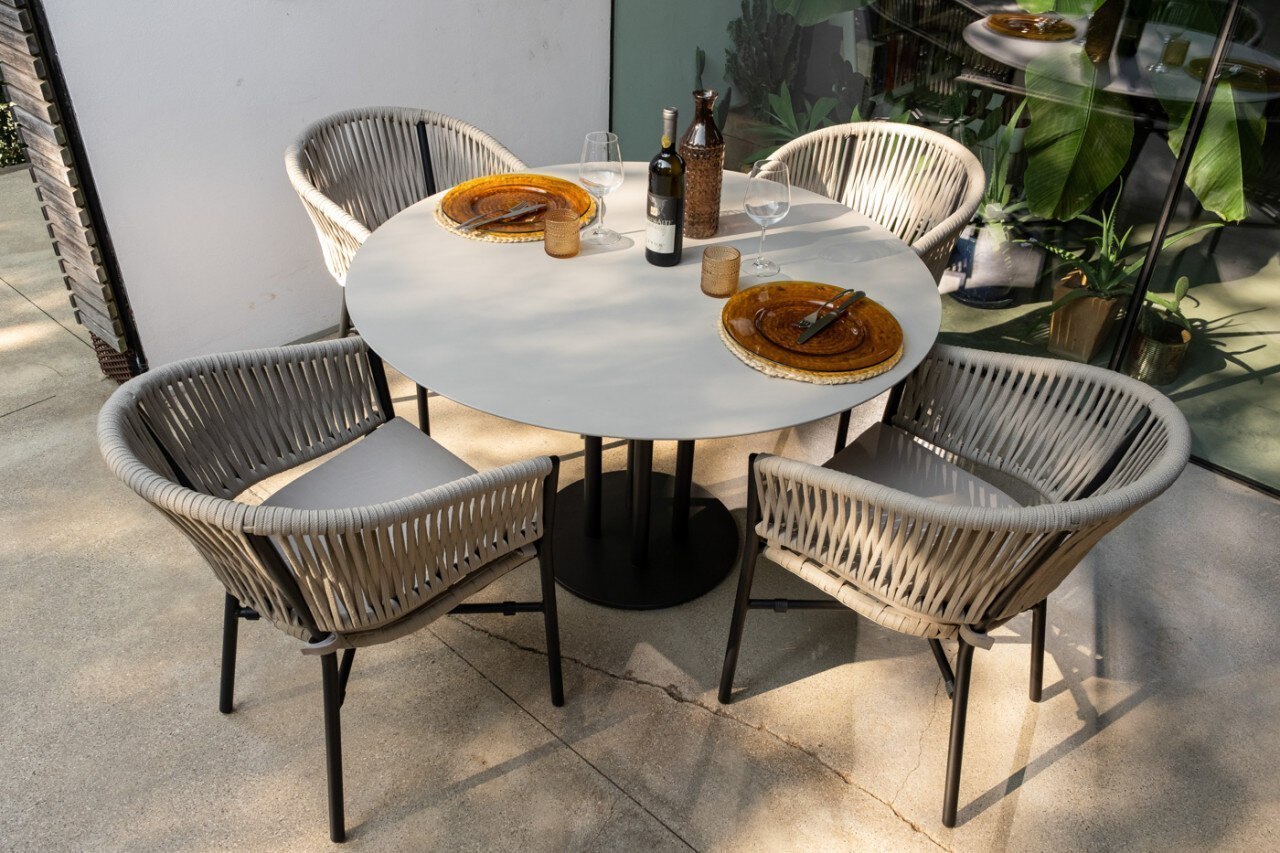
Protected metals. Metal can work beautifully at the beach, but only when it's properly finished and maintained. Look for well-applied protective coatings or powder-coated finishes, keep an eye out for chips, and wipe pieces down so salt doesn't sit on the surface. Untreated or poorly finished metal will streak and corrode quickly in salt air.
Performance fabrics. For cushions and upholstery, solution-dyed performance fabrics are made to take UV, moisture, and salt without fading or growing mildew the way ordinary fabrics do. They're easy to wipe clean, dry fast, and hold their colour through season after season of sun, which makes them ideal for a home you can't fuss over daily.
Skip the wrong things. Natural wicker and rattan, soft particleboard, and unprotected metal all look fine in the showroom and fail fast by the sea. Panels can be perfectly good for the right indoor use elsewhere, but they're not built for tropical coastal durability.
Design for indoor-outdoor living
The whole point of a Coronado home is that the inside and the outside blur together. Furnish for it deliberately.
- Let pieces move between zones. Choose dining and lounge furniture robust enough to sit on a covered terrace as comfortably as indoors, so you can open the doors and live across both.
- Plan for the breeze and the rain. Even covered, salt-laden air reaches your pieces. Position the most vulnerable items where they get some shelter, and keep coastal-rated materials for the exposed spots.
- Keep it visually continuous. Repeating a single hardwood tone and a calm, light palette from living room to terrace makes the whole home feel larger, airier, and intentionally designed.
Build for low maintenance and time away
A weekend or seasonal home has a special requirement: it has to look after itself while you're gone. The furniture you choose should forgive weeks of absence.
That means surfaces you can wipe down in minutes, finishes that don't need constant babysitting, cushions that dry quickly and resist mildew, and solid construction that won't loosen or warp between visits. It's worth thinking about how the house "rests" when empty, pulling cushions into a dry interior room, leaving air to circulate, choosing pieces that don't punish you for closing up the place. The less your beach house depends on you, the more you'll actually enjoy it.
Get the relaxed-luxury coastal look that lasts
Coastal style doesn't have to mean clichés. The most elegant beach homes here lean on a few honest moves: natural hardwood with visible, beautiful grain; a light, sun-washed palette of sand, ivory, and soft blues; uncluttered rooms that let the architecture and the view do the talking; and a handful of generous, well-made pieces instead of a crowd of disposable ones. Relaxed luxury is the absence of fuss, made of materials good enough to stay calm in a demanding climate.
At Marcelina Furniture Studio we build custom solid-wood pieces specifically for how Panama's coast lives, sized to your terrace and rooms, finished for salt, sun, and humidity, and made to be the furniture you don't have to think about. That's what lets you actually relax in your beach house.
Frequently asked questions
What is the best furniture material for a beach house in Panama?
There's no single answer, but durable tropical hardwoods like teak are an excellent foundation because their natural oils help them resist moisture and deter rot, paired with protected or powder-coated metals and solution-dyed performance fabrics for cushions. Avoid natural wicker, rattan, and particleboard, which fail quickly in salt air and humidity.
Can I bring my existing furniture from abroad to my Coronado home?
You can, but plan carefully. Note that used household goods may qualify for a customs exemption up to a value limit if you hold residency or a qualifying visa, while new furniture is dutiable and doesn't qualify. The process is formal and document-heavy, so a customs broker is well worth using. Just remember that city or temperate-climate furniture often won't survive the coast, so choose what you ship wisely.
How do I keep coastal furniture looking good when I'm away for weeks?
Choose low-maintenance pieces from the start: solid hardwoods, protected metals, and performance fabrics that wipe clean and dry fast. Before you leave, bring cushions into a dry interior space, let air circulate, and wipe salt off exposed surfaces. Pieces built for this climate are designed to forgive that kind of absence.
Let's design a beach house that lasts
Your Coronado home deserves furniture built for salt, sun, and humidity, not pieces that quietly fail while you're away. Tell us how you live by the sea and we'll craft it in solid wood, sized and finished for the coast.